The Shift
The aha moment Kevin described was not a feature. It was an inbox.
With 2NFORM, each maintenance notice includes a QR code. Landowners scanned it and submitted the required inspection documentation directly into Kevin’s 2NFORM inbox. No spreadsheet. No hunting through email threads to reconstruct where a project stood.
“They’re responding, they’re not throwing it in the trash. Once I started seeing those emails come in, I was just like, wow, it’s working.”
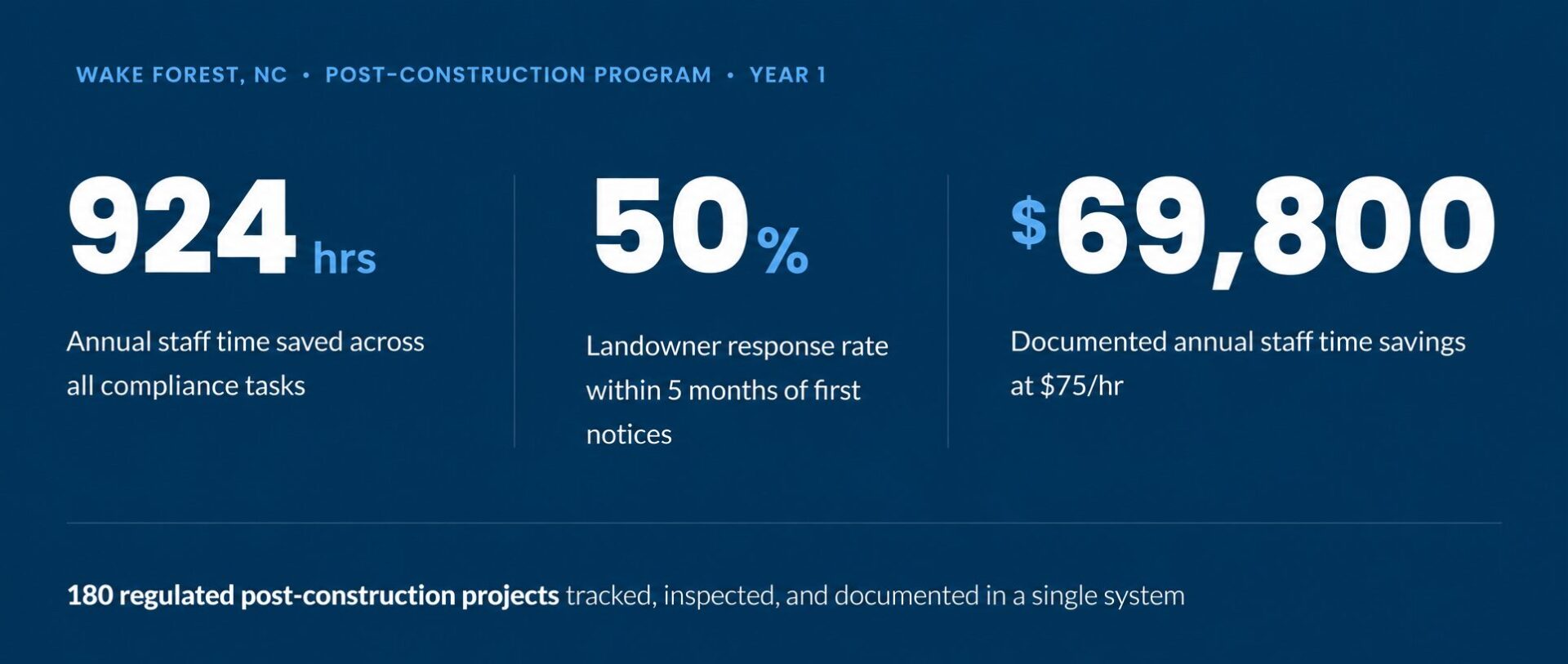
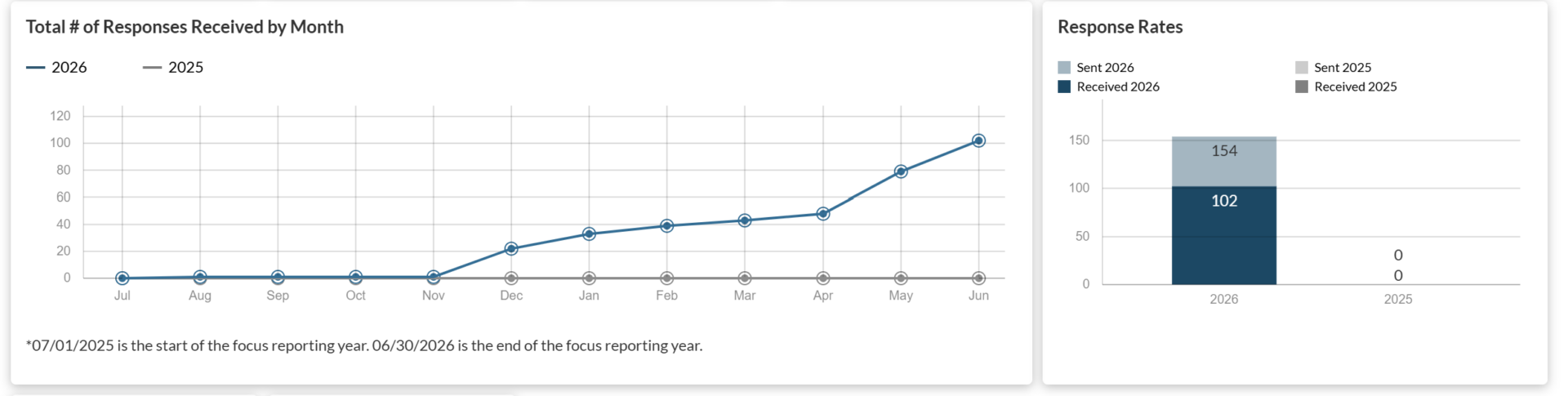
In the first five months after signing, eighty-nine responses came back. That is a 50% response rate in the first year. That is 89 projects Kevin no longer had to manually chase through email threads, spreadsheets, and back-and-forth correspondence. Nothing falls through the cracks. He knows who has responded, who hasn’t, and what each asset’s current status is.
“Our goal doesn’t stop at just sending maintenance notices to the responsible parties,” Kevin said. “The goal is to make sure these systems are actually protecting water quality. Now that the administrative work isn’t eating my week, I can now focus on that part.”
The weekly administrative work isn’t gone, it just no longer consumes Kevin’s week.
The Numbers
Wake Forest’s post-construction program runs 180 regulated projects and conducts approximately 400 SCM inspections every year. Kevin estimated his time before and after 2NFORM across six task categories at the Town’s loaded staff rate of $75 per hour. Three numbers tell the story.
930 hours saved per year. Across planning, inspections, data entry, communications, and compliance follow-up. At $75 per hour, that is $69,800 in annual staff time returned to the program.
336 of those hours saved came from resource management alone. Before 2NFORM, Kevin spent roughly a full day per week figuring out what needed to happen when. With 2NFORM’s prioritized to-do list, that is down to about an hour a week.
270 hours came from maintenance communications. What used to take about two hours per project across 180 projects, is now automatically arriving directly in Kevin’s inbox. The time it takes to communicate with responsible parties regarding compliance is one category most programs don’t account for when they estimate what compliance actually costs them.
What’s Next
Wake Forest was one of the last municipalities in Wake County to establish a stormwater utility. That utility passed in July 2024. The program has a funding source now. It has a strong stormwater asset registry. It has 180 regulated post construction projects tracked, inspected, and documented in a single system. Given the Town’s rapid growth, the post construction project count will continue to increase.
But this foundation is what makes the next step possible. Private landowners in Wake Forest need to understand not just that their stormwater controls require annual inspection, but why. A wet pond that isn’t maintained stops functioning. A bioretention cell that isn’t cleared loses its capacity. Whether that infrastructure actually retains volume and protects water quality depends on whether the people responsible for it know what they’re managing. Kevin now has the time and the data to start that conversation.
“You’re going from the Stone Age into space tech,” he said. “Everything’s in front of you. You keep track of everything.”
The program Kevin runs today would not have been possible to manage the way he was managing it two years ago. The audit forced the question. The growth made doing nothing unsustainable. And the tool he found gave him back the hours to do the job the way it was always supposed to be done.
With the post-construction program running, Kevin is looking to extend 2NFORM into additional MS4 compliance programs as Wake Forest continues to grow.
If your program is running post-construction compliance on spreadsheets, a patchwork of tools that don’t talk to each other, or a system that wasn’t built for MS4 work, 2NDNATURE can show you what Wake Forest uses and estimate what it would mean for your program specifically.